Lonely in My Home Country
Key Insights
Loneliness means that you don’t feel you belong to any group
Fighting loneliness takes courage and lots of energy
In the last two weeks, I have been in the Netherlands with the two youngest. We’ll stay for six weeks in total. The kids finish the school year here while I work when they are at school, and I solo-parent when they are home. The original reason for this trip was to spend time with my mom and help my dad with her care. But my mom passed away in April, sooner than we had all imagined. The trip had been booked and prepared extensively, so I decided to go to spend time with my dad. I thought he might feel lonely now that my mom was gone.
I was wrong. My dad was far from lonely. I was. He showed a remarkable resilience and a zest for life. He had taken care of my mom with dedication and patience that had surprised everyone, perhaps even himself. And as much as he had enjoyed being there for her, other parts of his life had been put on hold. He now unpaused those parts and appreciated being able to do them again. During the first week, my dad played golf on two days, volunteered at a lunch event for a network of retired professionals, had coffee with friends, met up with his sister, and attended a concert. I was home every single day, while my dad left and, on some days, told me he wouldn't be home for dinner or warned me not to stay up for him. How roles could reverse. But I was happy for him.
In the second week, my own loneliness grumbled louder each day. I had been so busy keeping my head above water with work and getting the kids adjusted to their new school that I had not yet had time to feel lonely. But the second weekend, it hit me like a brick. In my day-to-day life, I was not part of anything here. The school parents were all friendly. And I spoke their language fluently, even with the right accent, since I was born in this town. But I did not have friends here. A few neighbors were exceptionally nice and lent us a variety of things, including bikes and toys. They made time for chats, and my daughter soon found a friend. But they had weekly activities that kept them busy. Activities we also had back at home, such as soccer, ballet, band concerts, or end-of-school-year celebrations. Here, we weren’t part of any of those.
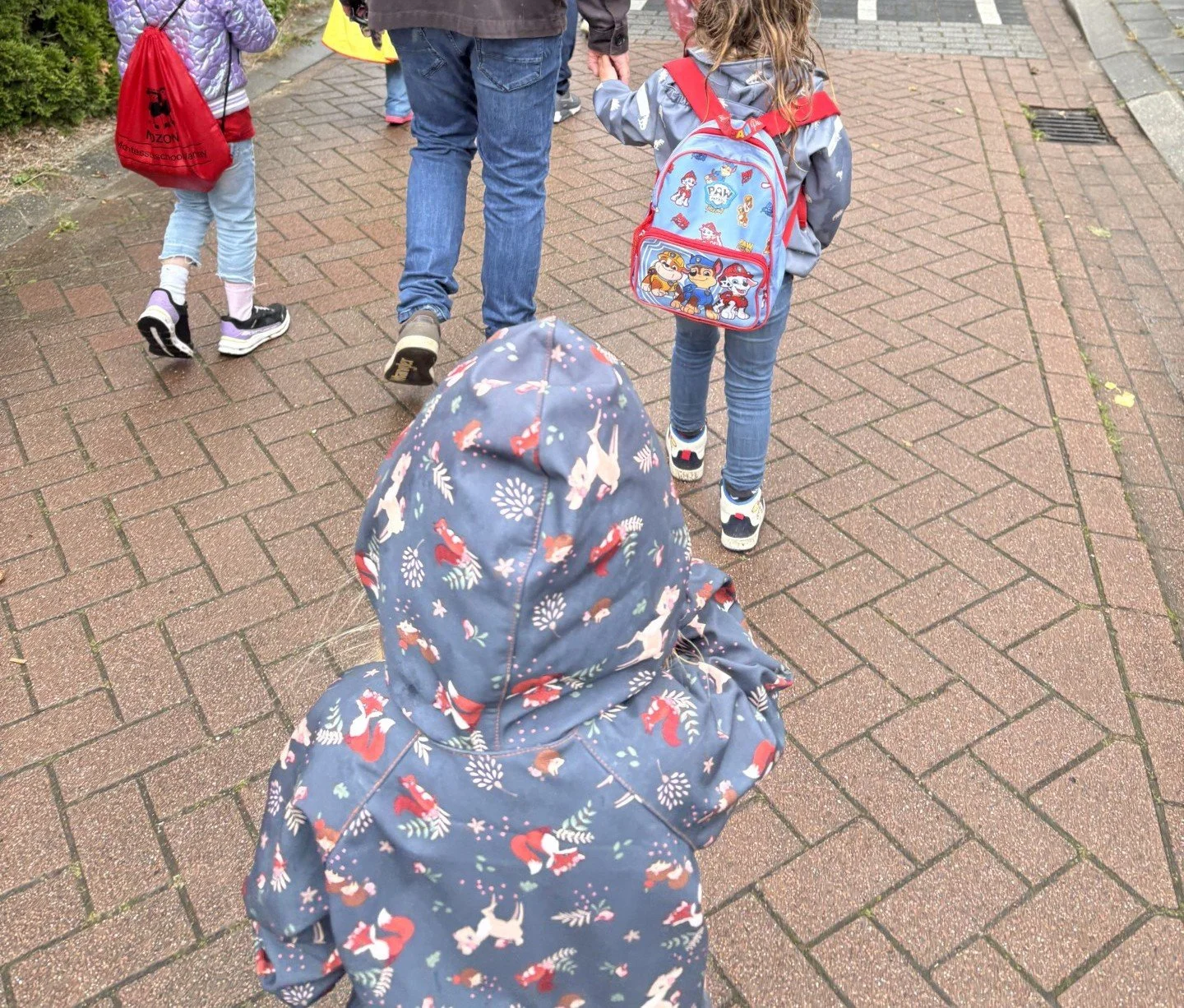
At the end of the second week, the city held its annual school hike festival, the Avondvierdaagse (“the evening four days”). Kids walk 3 to 15 km (depending on their age) with their classmates, every evening for four days in a row. It was a tradition I had grown up with and had fond memories of. I wanted to share this with my kids. Since we were too late to sign up, I put my 4-year-old in the backseat of my bike and biked around until we found her class. It was raining, and the kids did not seem to have fully decided if this event was actually fun. We met up with her class at a park where groups were on their break. One parent welcomed us warmly, while the others had the blank stare of someone who can’t believe they signed up for walking 3k with 10 toddlers in the rain. My daughter insisted on walking with her peers, so we formed the last row of the queue. A parent started a song. Some kids joined in. My daughter did not know the words. Plus, no one seemed to notice us. What on earth was I trying to do? We did not belong here. I maneuvered her out of the queue to make our way back to my bike. She was upset. I silently biked her to the finish line. Most school groups were still chipper, marching and singing optimistically to the end of this rainy evening. I hoped that this way, she would understand what this event was all about. Maybe we could try again tomorrow.
But the next day, she did not bring up the Avondvierdaagse. And I let it go. You can’t force being part of something that takes time to become part of. And thus, the feeling of loneliness grew a little each day. It gave me an important realization, though. At times, I feel lonely in Canada. And I always thought it had to do with the fact that I did not grow up there, or maybe because I have an accent. Because I am different. It does take me longer to understand certain events or recurring rituals. And I don’t have friendships that go all the way back to elementary or high school. But now, in a society I knew in and out, where I fit in seamlessly based on looks and speech, I still felt lonely. It made me realize that it is possible to feel lonely even if you have plenty of people around. Even if you are very similar to those people. Having people around is not the same as belonging. Loneliness happens when you don’t feel part of a group. You don’t really belong anywhere. And even though I was in my home country, even in the town I was born in, I was not part of any group here.
Growing up, I was part of at least five groups where I felt at home. I was part of a caring family, had a group of close friends, played in an orchestra, played field hockey, and was part of a speed skating group (which I replaced with a rowing team during my studies). I was also part of a group of PhD students and later, part of a department as a postdoc. I had always belonged to multiple groups. And I had been very happy throughout. In some life phases, especially when you have young children, it is more difficult to stay part of those groups outside of work and family. You’re trying to keep two balls in the air. That is when loneliness can seep in.
I made three resolutions. The first was to join a running group as soon as I returned to Vancouver. The second was to meet up with each friend for a good catch-up. The third was to schedule the recurring team meetings with my PhD students for the next few months (which had been on hold due to my travel). It was time to create or join groups I belong to. Finding groups or creating them can be scary, as we are putting ourselves out there. It also takes a ton of energy to get to know new people or keep in touch with the friends we already have. But there is no other option. We need human connection more than anything else to feel happy. If you don’t believe me, check out this TED Talk by Psychiatrist Dr. Robert Waldinger, who draws the same conclusion based on a 75-year Harvard Study.